How to Calculate Rise and Run for Deck Stairs
About This Project
Outline for calculating the rise and run of deck stairs to ensure they meet safety and comfort standards, and comply with building codes.
Tools & Materials

25 ft. Tape Measure
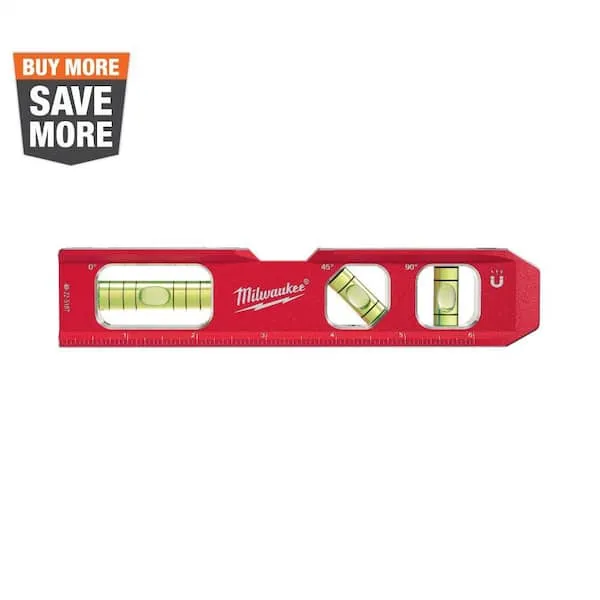
Level

Calculated Industries Construction Master 5 Calculator 4050

Calculated Industries Construction Master Pro Desktop with Full Trigonometric Function 44080
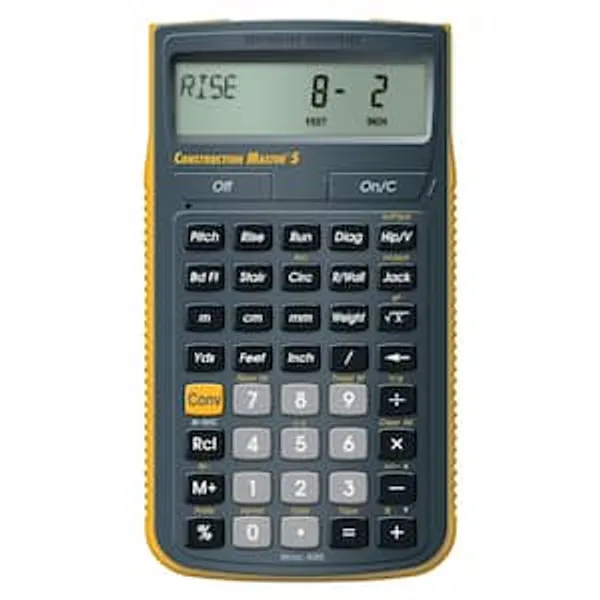
Construction Master 5 Calculator
25 ft. Tape Measure
Measure with precision and ease.
Level
Ensures surfaces are just right.
Calculated Industries Construction Master 5 Calculator 4050
The Construction Master 5 Calculator is an essential tool for construction pros. It helps you get fast, accurate construction-math calculations in the office or on the job site. Reduce the risk of expensive
Calculated Industries Construction Master Pro Desktop with Full Trigonometric Function 44080
The Construction Master Pro Desktop is easy to use on the jobsite or in the office and is perfect for completing layouts, bids and estimates. It is the most complete construction-math calculator on the
Construction Master 5 Calculator
Makes construction calculations a breeze.
Steps

Determine Total Rise
5 minutesMeasure the vertical distance from the surface where the top stair tread will be (finished deck height) down to the point where the bottom of the stairs will meet the ground (finished ground level). This measurement is the 'total rise' of your deck stairs. Ensure you account for any landscaping or ground cover that will be present at the finished level.
Watch: Determine Total Rise and Individual Riser Height
Determine Desired Riser Height
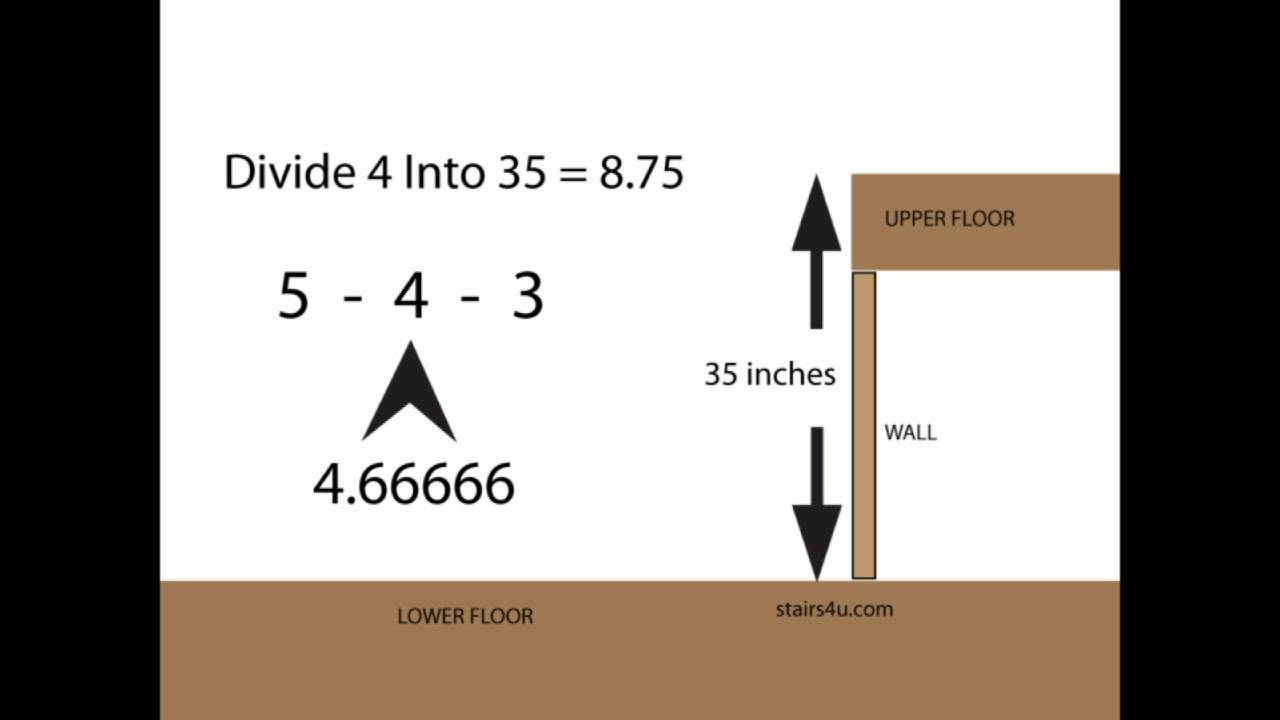
5 minutesChoose a comfortable and code-compliant riser height. Standard practice and building codes often recommend a riser height between 6 and 8 inches. For optimal comfort, aim for consistency. Once you have chosen a desired riser height, divide the 'total rise' by this number. The result will be the number of risers needed. Round this number to the nearest whole number. For example, if your total rise is 48 inches and you aim for a 7-inch riser height, 48 / 7 = 6.86, which you would round to 7 risers.
Watch: Calculate Riser Height (Option 1)Calculate Actual Riser Height
3 minutesTake the 'total rise' measurement and divide it by the number of risers you determined in the previous step. This will give you the precise 'actual riser height' for each step. For instance, if your total rise is 48 inches and you need 7 risers, the actual riser height would be 48 inches / 7 risers = approximately 6.86 inches per riser. This value is what you will use for construction.
Watch: Calculate Riser Height (Option 1)
Determine Total Run
10 minutesThe 'total run' is the total horizontal length of the stairs from the face of the first riser to the face of the last riser. While not directly calculated from rise and run, it's influenced by desired tread depth and the overall slope. A common rule of thumb for comfortable stairs is that twice the riser height plus the tread depth should be between 24 and 25 inches (e.g., 2*Riser + Tread = 24-25). This is often referred to as the 'stride length'. You also need to consider the maximum horizontal distance allowed by local codes for stairs of a certain rise, and the space available.
Watch: Calculate Total Run
Calculate Tread Run
5 minutesThe number of treads is typically one less than the number of risers. For example, if you have 7 risers, you will have 6 treads. Divide the 'total run' by the number of treads to determine the 'tread run' for each step. For instance, if your total run is 72 inches and you have 6 treads, the tread run would be 72 inches / 6 treads = 12 inches per tread.
Watch: Calculate Risers, Treads, and Total RunVerify Stair Slope and Riser/Tread Ratio
10 minutesUse the '2R + T' formula (2 times the riser height plus the tread depth) to check the comfort and safety of your stair dimensions. The ideal range is generally 24 to 25 inches. For example, if your actual riser height is 6.86 inches and your tread run is 12 inches, then 2 * 6.86 + 12 = 13.72 + 12 = 25.72 inches. This is slightly outside the ideal range and might indicate a need to adjust total run or riser height slightly for better comfort, or it may be acceptable depending on local codes. Also, verify that the difference between any two riser heights or any two tread runs is no more than 3/8 inch, as required by most codes.
Watch: Calculate Risers, Treads, and Total Run